Will democracy survive?
When we founded Power for Democracies in 2023, the world seemed a different place, writes Markus Beeko. Now, our mission to identify solutions and tactics that strengthen democracy is even more urgent.

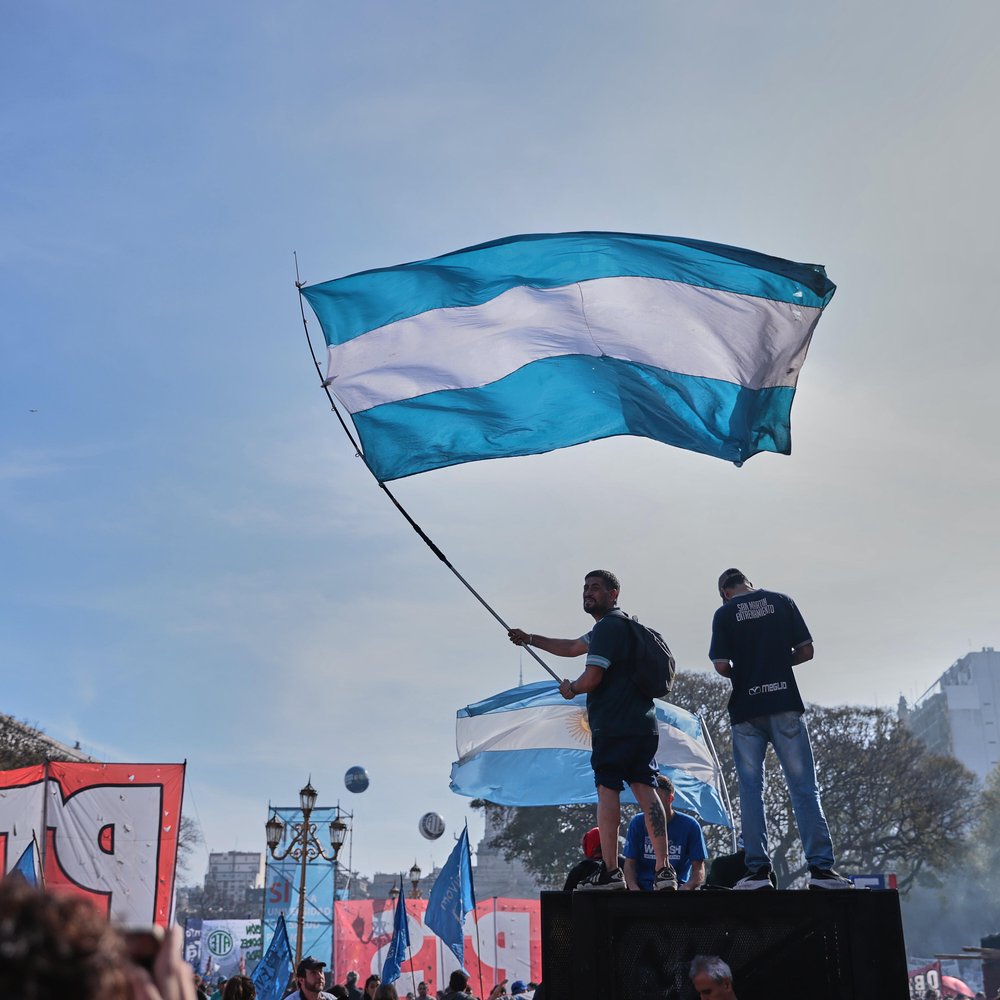
The question – will democracy survive? – hung on a banner over the stage at an international gathering I recently attended.
The conference brought together policymakers, legal experts, AI researchers and civil society activists, fighting on the front lines of human rights and democracy. In the workshops and panel discussions, the contributions from attendees like the Israeli historian Yuval Harari, the Nobel Peace Laureate Tawakkol Karman or the Belarusian opposition leader Sviatlana Tsikhanouskaya all underscored the threats and challenges facing democracy, peace, and humanity.
When we set up Power for Democracies, the focus on defending democracies was not at the centre of our thoughts. The questions initially driving our small group of researchers, scholars, and activists focused on democratic resilience – on the question of whether democracies were being perceived as delivering or on how democratic innovations could help develop democracies to keep them relevant, responsive, and resilient.
But by the middle of 2024, global developments were sending stark signals. For the first time in two decades, the Varieties of Democracy Institute, or V-Dem, found that autocracies outnumbered democracies, 91 to 88. The number of liberal democracies sat at 29 countries – a level not seen since 2009. Around three in four people in the world lived in some form of autocracy.
Power for Democracies' first analysis of anti-democratic attacks in 147 countries showed that 120 countries across the globe were affected and how sophisticated the variety of the attacks were.
It became evident to us that our starting point should be ‘defending democracy’. Our aim was to identify civil society initiatives effectively countering authoritarian attacks in priority countries – and, importantly, organisations that have funding gaps for initiatives that donors could fill.
The systematic process we developed covers four phases.